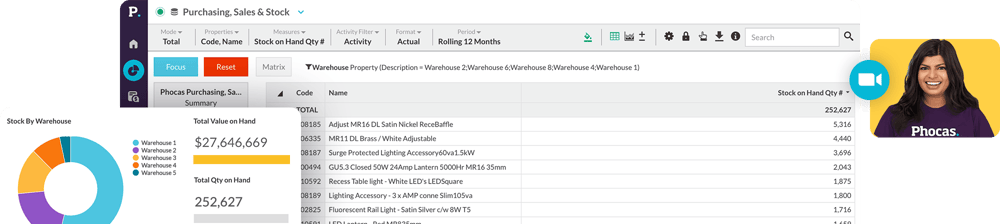
Retail inventory optimization software
Empower your business to make informed decisions across various facets of retail management, from stock level analysis to inventory optimization and forecasting.
4.8/5 on Capterra
4.6/5 on G2

Inventory planning is all about the data
Phocas provides a retail inventory optimization software solution by pulling ERP data + other sources into one centralized platform. It's fast and easy for everyone to tap into sales, purchase order and inventory-level data. Helping to optimize inventory planning and improve demand forecasting.
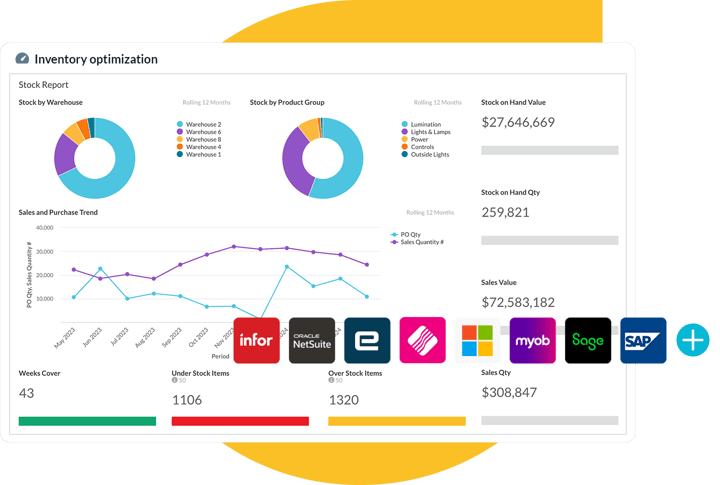
Seamless retail inventory optimization
- Manage stock: ensure optimal inventory levels with a clear, up-to-date view of what’s moving and what isn’t
- Forecast: use budget Vs actuals to accurately forecast demand; see which products need replenishment, liquidating or to be moved between locations
- Trend analysis: quickly pull together purchase history, sales forecasts, seasonal and market trends to accurately predict stock levels needed months in advance
- Maximize profitability: with accessible, up-to-date data, purchasing and inventory teams can control pricing and improve supply chain planning
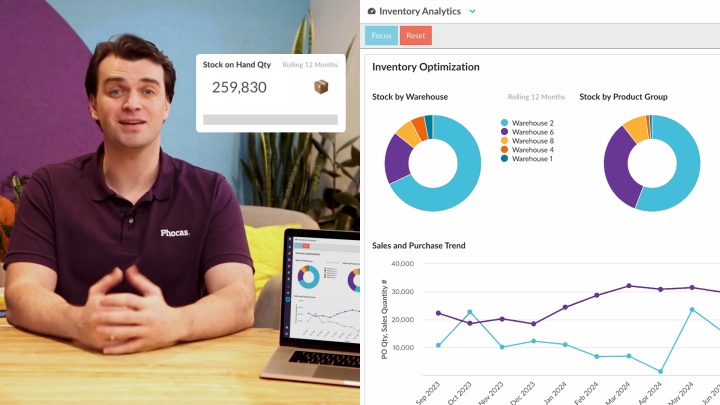
Trusted by companies worldwide
The Phocas platform empowers 2,900+ businesses who make, move and sell products. 97% of customers stay with us year-on-year because our platform gives people the confidence to run their businesses better.















- Asko
- Bayer
- Bupa
- Fuji Xerox
- Gazman
- Repco
- Sistema
- Thermofisher
- Henry Schein
- KYB
- Husqvarna
- Johnstone Supply
- Karcher
- WD-40
- Yamaha
- Bunzl
Accurately forecast demand
- Detailed: analyze patterns for different market segments such as customer demand by product class, geography, sales channel, purchase history
- Reforecast: easy access to live actuals empowers teams to adjust forecasts to align with changing inventory needs
- Seasonal: tap into historical data and analyze your seasonal retail trends to create more accurate inventory forecasts
- Review: easily review your forecast accuracy by comparing it to actuals

Clear inventory visibility
Phocas has helped Savona better plan for seasonality and establish different stock holding policies for different products depending on whether they’re identified as slow or fast moving.


Customer quote
“We import a range of products from overseas where we need to order them months in advance. By looking at the sales history we can predict what stock levels we are going to need in the coming weeks and months. For stock management, Phocas is absolutely brilliant.”
— Chris Rath, Operations Manager at Tradeware.
Sage + Phocas customer
Self-serve ad-hoc reporting
- Easy: create and automate profit & loss, balance sheet and cashflow statements for cross-functional teams in minutes
- Accurate: reports update automatically with data pulled directly from your ERP + any other source
- Self-serve: drill down into transaction-level data and drive improvements by branch, division, sales rep, product, customer
- Customize: add visualizations or calculations such as revenue and gross profit per rep, or days stock cover that auto update
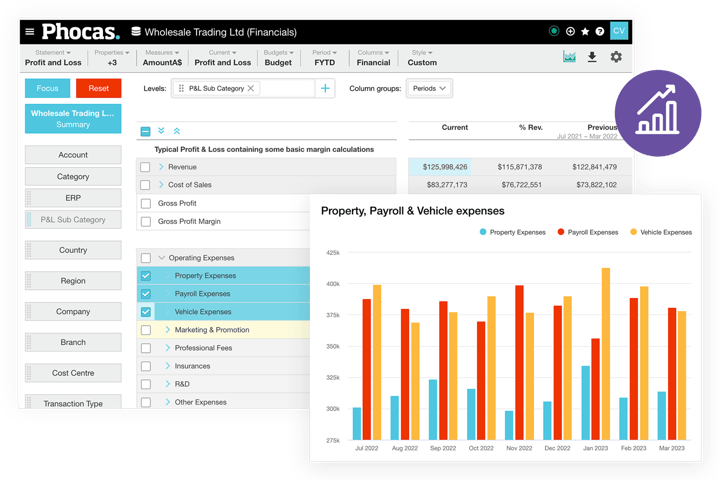
Streamlined budgets & forecasts
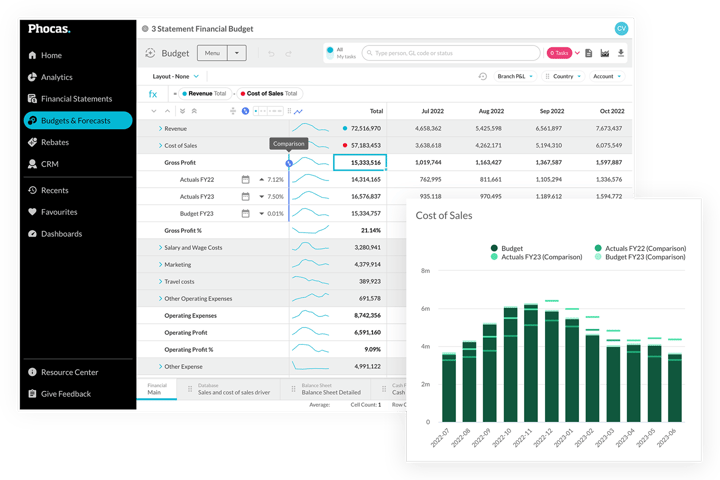
- Time-saver: a user-friendly planning tool that speeds up budgeting and enables you to get more detailed
- Accurate: use live actuals pulled from your ERP to accurately forecast your future balance sheet position and financial health
- Consolidate: connect plans across the business in one place; financial budgets, sales forecasts, headcount and demand planning
- Collaborate: improve cross-functional input and accountability with robust workflows and user-based permissions
Smart purchasing and holding
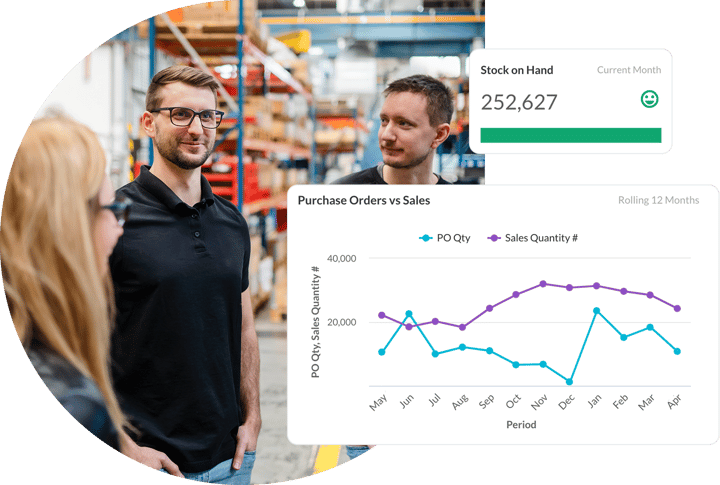
- Review order quantities against purchased stock levels
- See which departments, categories or product lines are the most profitable inventory investments
- Ensure products are in the right locations and distribution centers based on customer demand
- Quickly see what you're holding and selling by location, quantity, value
Customer quote
“Our data in Phocas, combined with our retail partners' sales data lets us plan inventory to place the right commitments with our resources and vendors overseas. This allows us to make sure we're holding the right number of weeks stock domestically to meet demand. It ensures that we are running a profitable business.”
— Harvey Lewis, General Manager at Caprice.
Improve customer service levels
- Proactively improve supply chain management with up-to-date visibility into supplier performance, lead times, and order fulfilment processes
- Regularly reviewing supply chain performance on a cloud-based platform allows you to optimize procurement processes and mitigate risks associated with supply chain disruptions
See how Phocas stacks up against the competition
Based on hundreds of customer reviews on BARC, see how Phocas compares with other software providers.
Anaplan vs Phocas
Anaplan 
vs
Phocas Software 
Project length: Anaplan 7.8, Phocas 8.62
7.8
Project length
8.62
Ease of use: Anaplan 8.2, Phocas 8.6
8.2
Ease of use
8.6
Recommendation: Anaplan N/A, Phocas 8.5
N/A
Recommendation
8.5
Reporting / analysis: Anaplan 7.6, Phocas 8.26
7.6
Reporting / analysis
8.26
Performance satisfaction: Anaplan N/A, Phocas 8.26
N/A
Performance satisfaction
8.26
Planning content: Anaplan 6.1, Phocas 7.66
6.1
Planning content
7.66
Predefined connectors: Anaplan 5.3, Phocas 7.6
5.3
Predefined connectors
7.6
Source: The Planning Survey 26, BARC
Board vs Phocas
Board 
vs
Phocas Software
Project length: Board 8.1, Phocas 8.62
8.1
Project length
8.62
Ease of use: Board 8.2, Phocas 8.6
8.2
Ease of use
8.6
Recommendation: Board N/A, Phocas 8.5
N/A
Recommendation
8.5
Reporting / analysis: Board 8.1, Phocas 8.26
8.1
Reporting / analysis
8.26
Performance satisfaction: Board 8.2, Phocas 8.26
8.2
Performance satisfaction
8.26
Planning content: Board 6.8, Phocas 7.66
6.8
Planning content
7.66
Predefined connectors: Board 6.3, Phocas 7.6
6.3
Predefined connectors
7.6
Source: The Planning Survey 26, BARC
Prophix vs Phocas
Prophix 
vs
Phocas Software
Project length: Prophix 8.8, Phocas 8.62
8.8
Project length
8.62
Ease of use: Prophix 8.2, Phocas 8.6
8.2
Ease of use
8.6
Recommendation: Prophix 8.4, Phocas 8.5
8.4
Recommendation
8.5
Reporting / analysis: Prophix 7.6, Phocas 8.26
7.6
Reporting / analysis
8.26
Performance satisfaction: Prophix 7.3, Phocas 8.26
7.3
Performance satisfaction
8.26
Planning content: Prophix 6.0, Phocas 7.66
6.0
Planning content
7.66
Predefined connectors: Prophix 6.5, Phocas 7.6
6.5
Predefined connectors
7.6
Source: The Planning Survey 26, BARC
Vena vs Phocas
Vena 
vs
Phocas Software
Project length: Vena 8.1, Phocas 8.62
8.1
Project length
8.62
Ease of use: Vena 8.3, Phocas 8.6
8.3
Ease of use
8.6
Recommendation: Vena 8.8, Phocas 8.5
8.8
Recommendation
8.5
Reporting / analysis: Vena 7.6, Phocas 8.26
7.6
Reporting / analysis
8.26
Performance satisfaction: Vena 8.25, Phocas 8.26
8.25
Performance satisfaction
8.26
Planning content: Vena 7.5, Phocas 7.66
7.5
Planning content
7.66
Predefined connectors: Vena 6.3, Phocas 7.6
6.3
Predefined connectors
7.6
Source: The Planning Survey 26, BARC
Jedox vs Phocas
Jedox 
vs
Phocas Software
Project length: Jedox 8.9, Phocas 8.62
8.9
Project length
8.62
Ease of use: Jedox 7.6, Phocas 8.6
7.6
Ease of use
8.6
Recommendation: Jedox N/A, Phocas 8.5
N/A
Recommendation
8.5
Reporting / analysis: Jedox 7.6, Phocas 8.26
7.6
Reporting / analysis
8.26
Performance satisfaction: Jedox 7.9, Phocas 8.26
7.9
Performance satisfaction
8.26
Planning content: Jedox 7.1, Phocas 7.66
7.1
Planning content
7.66
Predefined connectors: Jedox 7.3, Phocas 7.6
7.3
Predefined connectors
7.6
Source: The Planning Survey 26, BARC
Workday Adaptive Planning vs Phocas
Workday Adaptive Planning 
vs
Phocas Software
Project length: Workday Adaptive Planning 7.8, Phocas 8.62
7.8
Project length
8.62
Ease of use: Workday Adaptive Planning 7.7, Phocas 8.6
7.7
Ease of use
8.6
Recommendation: Workday Adaptive Planning N/A, Phocas 8.5
N/A
Recommendation
8.5
Reporting / analysis: Workday Adaptive Planning 7.6, Phocas 8.26
7.6
Reporting / analysis
8.26
Performance satisfaction: Workday Adaptive Planning N/A, Phocas 8.26
N/A
Performance satisfaction
8.26
Planning content: Workday Adaptive Planning 5.5, Phocas 7.66
5.5
Planning content
7.66
Predefined connectors: Workday Adaptive Planning 6.9, Phocas 7.6
6.9
Predefined connectors
7.6
Source: The Planning Survey 26, BARC
View data any way you like
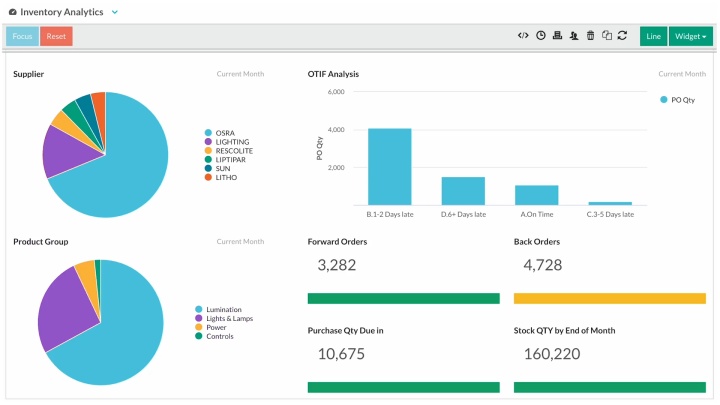
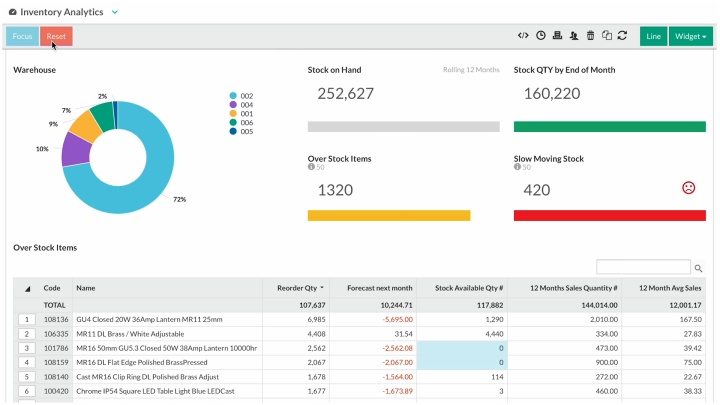
- Unlimited custom dashboards provide high-level overviews, enhancing multi-echelon (locations) inventory optimization
- Drill into underlaying dashboard data to identify areas such as excess inventory on slow-moving unprofitable stock
- Add customized calculations that make sense for your inventory planning such average inventory COGs over 12 months.
Simplify inventory management with one platform


We think you’ll love Phocas, but don’t take our word for it
Based on 270+ customer reviews






























Understand the past, operate better today, and plan well for the future
Whether you want to get your data organized for your team or you’re looking to combine business intelligence capabilities with financial reporting, planning and forecasting… We can help.
Get a demo