Attract and keep the best finance talent with financial analysis software
There is a global shortage of finance talent. Yet there is also a growing push toward having a more modern finance team that can be ready for anything, can quickly share up-to-date numbers and coach others in the business about financial performance. The biggest obstacle to achieving digital innovation in finance is the lack of trained teams. To help address the problem, companies need to consider intuitive financial analysis software. These tools can build a bridge to digitizing finance capabilities providing benefits for both the experienced finance team member and the rookie.
Get a strategy for talent
A new generation of educated, diverse and tech-literate talent has entered the workforce. They’re seeking meaningful roles and the ability to understand the whole business, whether it be manufacturing or construction. And they have the skills to use new technologies to bring about change. All this is happening at a time when finance’s customers—external (e.g. tax office, suppliers), internal (e.g. CEO and purchasing)—are requesting more information that's accurate, insightful and timely. You need to attract these people to your business, motivate them and include them in the transformation of both your finance team and company.
A poor fit hire that leaves within 12 months can cost companies dearly, and most of the time, a person doesn’t work out because of a mismatch to the company culture. It’s important to consider whether a person is suited to your finance team and what your business can provide. As well as a great mentor to train them – does your company use modern financial analysis software tools? These business tools will be attractive to both the new graduates and the rest of the team. Software that reduces administration and ‘busy work’ keeps morale high and allows people to concentrate on providing more value to the business.
Retaining talent is as crucial as finding talent. Some of the best finance professionals may leave your organization if you fall behind in keeping up with financial technology or they're unaware of the strategic path of the business.
What skills are needed in a modern finance team?
To start modernizing the finance team, the CFOs need to get close to stakeholders and determine how their needs are changing and what new talents the finance team are likely to need. Two skills often come up are a) fundamental accounting knowledge plus the ability to adapt and grow, which usually also means excellent communication skills so finance people can work across divisions and understand their issues.
These hybrid skills are in demand for emerging finance team jobs such as process owners, business growth advisers, and data analysts. The problem-solving skills of accounting managers are in demand across the business —so they can automate reports and dashboards for others and share financial knowledge.
Help finance teams succeed
The best way to transform a team is to have a great leader. Talk to the CFO or maybe the CFO has already approached the board with the need to change. A strong leader will know he/she needs a group of diverse people who can drive strong performance and can merge strategy with the day-to-day delivery of reports, paying suppliers and monitoring cashflow.
With the growth of cloud ERP technology and data analytics, most companies have seen the benefits of adopting technology that provides easy access to information, greater standardization and simplification.
Utilizing the right tools means keeping things simple, finance teams are focusing on collecting the right data and presenting it clearly to the business, to drive the right business outcomes. Teams are then building on that foundation with data insights – allowing the company to find new opportunities and long term value for the business.
Develop a plan for change
A plan that reviews the finance team’s goals and appetite for change will uncover many ways to automate, reduce costs, and increase the efficiency of transactional processes.
Addressing time-consuming processes is the right place for companies to start and an easy way to get some quick wins.
At Prochem, management accountant Shane Angel started by tackling low margin accounts, Previously it had been a very manual process and the finance team only had time to review high-level invoices.
“When we started using Phocas, we were able to unlock all of the low margin invoices automatically – we’d set a threshold for each account type, and we could identify them all. This was a huge time saver,” adds Angel.
Shane Angel is a management accountant and a typical example of a professional who augments his traditional financial responsibilities with comprehensive data analysis. Angel describes himself as ‘the Phocas guy’ and also ‘the numbers guy’. He carries out the financial reporting as well as sharing data insights and skills across the company’s nine branches in Australia, Thailand and Singapore.
Another obvious process for change is financial statement reporting as many studies have shown about 40% of management accountants time is spent on month-end reports.
The decision to add Phocas Financial Statements for Replenex was straight forward because month-end reporting was a drawn out and complex process.
Adding Financial Statements allows daily financial activities to be streamlined eliminating manual processes and many people can access the actual figures (without affecting the general ledger).
With Phocas Financial Statements, the team drastically reduced their accounts payable (AP) and accounts receivable (AR) month-end reporting from 7-10 business days down to just 3 business days. The extra time gave the executive team opportunity to review the financials before submitting them to the bank, enabling greater data transparency and sharing of information across the business.
Tony attributes Replenex’s record-low past due accounts receivable (AR) balance of 7.5% (well below the industry average of 10-15%) to the clarity of the automated Phocas reports. He highlights the weekly Monday morning AR report sent to the executive team as a crucial factor in reducing any outstanding debt.


Empowering businesses with intuitive data analytics, driving informed decisions for growth and profitability. We make people feel good about data.
Related blog posts

Phocas is launching Tomorrow's Distributor, a new interactive learning series designed to help sales and finance professionals tackle everyday business challenges, make better use of their data and prepare for the future of distribution. We know the distribution industry is constantly changing. This year consolidation has proliferated, especially in America, where merger and acquisition transactions are up 7.7% year over year according to AXIA data. These new, larger companies create complex working environments that require systems that can ingest data from many systems into one platform for multi-entity reporting and consolidation. At the same time, 49% of distributors are using AI for sales but with limited impact according to our new State of Sales in Distribution Report. As Phocas works with distributors every day, we decided to respond to these changes by offering a free program to address some of these data and tech challenges featuring Phocas experts and customers.
Read more
Aktion Associates has been named FY26 North America Partner of the Year in the inaugural Phocas Partner Awards, following 90% year-over-year growth. A leading North American ERP and business technology partner to mid-market companies in architecture, engineering, construction, distribution and manufacturing, Aktion has worked with Phocas for six years to help customers see business performance more clearly and make more informed decisions.
Read more
Kilimanjaro Consulting has been named the APAC winner of the inaugural Phocas Partner Awards. Kilimanjaro has grown customer value year-over-year, with 30% of existing customers extending their use of Phocas.
Read more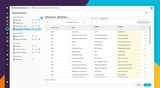
Mapping your general ledger accounts to a financial statement is one of those jobs everyone in finance knows and nobody wants to mess up. Whether you call it account mapping, GL mapping or GL coding, it is matching every account in your chart of accounts, line by line, to the right row on the P&L (income statement), balance sheet or cash flow. Miss one account or mis-map another and the numbers don't reconcile. Get it right and it takes hours but it is longer again if you're rolling the work out across multiple entities, branches or depots. Phocas Financial Statements has just added two features that change this. A Statement Library of ready-to-use report templates and AI-suggested account mapping with confidence scoring. Together, they turn an important manual setup task into something you can replicate and trust.
Read moreBrowse by category
Find out how our platform gives you the visibility you need to get more done.
Get your demo today