How to stop losing customers to competitors?
In a competitive market, losing customers rarely happens overnight. It’s usually a slow drift. A delayed response here, a missed follow-up there and a competitor’s discount that seems like enough and suddenly a once-reliable account becomes one of your lost customers.
That’s the hard truth for every distributor, manufacturer or retailer trying to protect their customer base while also chasing new customers. And it’s why customer retention is so important. Acquiring new customers can cost significantly more than keeping existing customers, which means churn quietly drains profitability long before it shows up as a problem.
Churn is often preventable if you know what to look for, and you build the right habits, analyze the data and respond before customers slip away. In this blog we’ll break down why customers leave, what warning signs to watch and practical ways to strengthen loyalty with the best technology.
The inevitable reality of competition
Your customers are constantly being sold to through social media, email campaigns, cold phone calls and with messages on LinkedIn. Your competitors are targeting your accounts with bundled offers, better pricing and promises of better customer support or improved functionality. No doubt you also try to win your competitors' customers the same way.
Recognizing the signs of churn
Most churn comes with clues. These are the signs that Phocas has seen when working with sales analysis. Common warning signs include shrinking orders or less frequent orders.
Customers stop responding to follow-up messages from your salespeople or sales team. Then their behaviour starts to change. They have more complaints and more issues. Perhaps satisfaction drops after an interaction or they mark you down in net promoter score. Sometimes the key contact changes roles and you don’t rebuild the relationship. If you can identify these signals early, retention becomes a proactive pursuit. This means you have a relationship and you’re more likely to find out what’s the matter and have time to address it.
Proactive strategies for building loyalty
Great customer service
A strong customer experience is one of the most useful advantages you can create because it’s hard to copy quickly. Competitors can match pricing or offer discounts. It’s much harder to replicate a business that is consistently easy to buy from, fast to respond and reliable with delivery.
Make all your practical ordering and returning processes straightforward so it is easy doing business with you. Customers often leave when working with you is harder than it should be.
Build strong customer relationships
Retention is mostly human. Customers stay when they feel understood and when they trust your team are working in their best interest.
Your salespeople should spend time with existing customers and see how their business works. Catch-up regularly and set-up planned meetings. Customer contact should feel helpful not just transactional. Customers want insight. They want to know how you can make their work easier and get everything from you and how same day delivery works.
Continuously innovate and differentiate your offerings
As well as comparing price, customers also compare fit. If your products no longer match evolving customer needs, churn becomes a matter of time. Keep your value proposition current by updating your product mix and launching new products that reflect demand. Invest in operational excellence as even minor improvements can create perceived value when they address the needs of your customers. Many businesses lose customers simply because customers don’t realize how much value they already provide. Communicate your value clearly and be explicit about the type of SKUs you offer, your service levels and the type of expertise your sales and customer service people can offer.
Offer competitive pricing with added value
Pricing matters. But competing only on price is a dangerous short-term strategy.
Instead be transparent about how pricing works. A great offer is a bundle that increase value, not just discounts. Offer added value with priority service, training, faster delivery or extended support hours across various branches.
If you rely on offering discounts as your main defense, you’re training customers to shop around. If you attach value to pricing, you give customers reasons to stay.
Leveraging data to drive retention
Retention becomes more successful when you manage it. Too often, businesses only realize they are losing customers after revenue has already declined significantly or worse, after the relationship has ended entirely. By then, recovery is difficult and expensive. In a competitive market, waiting for obvious signs of churn is a risk.
Customer behavior always leaves clues. A slight drop in order frequency, smaller average order values, fewer product categories purchased or longer gaps between interactions can all signal emerging dissatisfaction. On their own, these changes may not spark an issue. But when viewed collectively and tracked consistently, they tell a clear story. The key is data visibility. When businesses leverage data effectively, they can detect these patterns early and intervene.
Customer retention starts with analyzing historical buying behavior to establish what is typical for each customer or buying group. From there, deviations become easier to identify. If a long-standing customer suddenly reduces volume or stops purchasing a specific product line, that shift deserves attention. Rather than assuming the change is seasonal or temporary, proactive outreach can uncover what’s happening.
Technology plays a crucial role in making this practical. A well-maintained CRM system provides context around interactions, follow-up history, objections and notes from the sales team. When CRM data is combined with sales and operational data in tools like Phocas Analytics, businesses gain a more complete picture of account health.
Instead of manually building reports or spending hours digging through ERP data, businesses can quickly identify which accounts are trending downward and require attention. That visibility enables earlier intervention, more strategic follow-up, and stronger customer retention outcomes.
There are now also segmentation tools like Phocas Sales Insights that can group customers according to their recency, frequency and monetary value and help sales people by showing them what customers need to be called today, are slipping or can’t be lost.
This approach also transforms how salespeople prioritize their time. Rather than focusing solely on new customers or responding to the loudest issues, the sales team can direct outreach toward accounts that show measurable signs of risk. Conversations become more informed and consultative. Instead of asking generic check-in questions, representatives can reference specific trends and offer tailored solutions.
Leveraging data for retention is about control. While competition is inevitable and market conditions will continue to evolve, businesses that monitor behavioral signals and act decisively are far less likely to be surprised by lost customers. By combining strong customer relationships with intelligent use of data, organizations can protect revenue, strengthen loyalty and reduce churn long before it impacts the bottom line.
Smarter selling starts with segmentation
Download now


Empowering businesses with intuitive data analytics, driving informed decisions for growth and profitability. We make people feel good about data.
Related blog posts

Phocas is launching Tomorrow's Distributor, a new interactive learning series designed to help sales and finance professionals tackle everyday business challenges, make better use of their data and prepare for the future of distribution. We know the distribution industry is constantly changing. This year consolidation has proliferated, especially in America, where merger and acquisition transactions are up 7.7% year over year according to AXIA data. These new, larger companies create complex working environments that require systems that can ingest data from many systems into one platform for multi-entity reporting and consolidation. At the same time, 49% of distributors are using AI for sales but with limited impact according to our new State of Sales in Distribution Report. As Phocas works with distributors every day, we decided to respond to these changes by offering a free program to address some of these data and tech challenges featuring Phocas experts and customers.
Read more
Food and nearly everything else that is bought and sold must travel from where it is produced to the buyer. Transportation costs are rising sharply. Oil prices have surged by approximately 45% and gas by 55% since late February, a direct consequence of the escalating conflict in the Middle East. Distributors and their supply chain managers have been up against inflation and rising prices since the pandemic and and to cope with continuing shocks like the Middle East crisis most have had to change their supply chain processes to manage a more volatile marketplace. Business intelligence (BI) helps distributors understand risk exposure and make confident decisions when the range of possible futures runs from bad to considerably worse.
Read more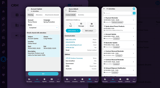
Sales work doesn’t happen neatly at a desk. It happens in real-time while in the car between appointments, on warehouse floors, in customer offices, over coffee and sometimes after hours when you finally get a moment to log what happened during the day.
Read more
How can you maximize the business benefits from your enterprise resource planning (ERP) system? You get there by rethinking ERP reporting as a layered reporting system that turns ERP data into real-time insights, not just historical outputs. For years, enterprise resource planning platforms have been the backbone of manufacturing, distribution and retail because they capture orders, inventory, invoices and financial data in one place. Yet the price and effort of implementing ERP software has often led business people to question whether the company is getting the value they expected. It depends on how well people can access, analyze and act on the information inside the ERP system and related data sources.
Read moreBrowse by category
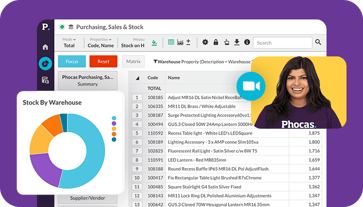
Find out how our platform gives you the visibility you need to get more done.
Get your demo today