Struggling to track adjustments outside your ERP?
If you’re nodding along to this headline, you’re probably interested in finding out how this process can be made reliable and repeatable. Many finance teams need spreadsheets, email trails and offline files to make critical adjustments before reports are ready for the business. It works until it doesn’t. As complexity grows, the gap between your ERP and the final ‘true’ management view widens.
So let’s unpack a more pertinent question. Are you making adjustments outside your ERP to produce the results your business needs?
Maybe you’re doing consolidated reporting and need intercompany journals to get an accurate group view. Maybe you’re normalizing management results so month-to-month comparisons and trend analysis is more telling. Or perhaps you’re removing large abnormal cost such as legal fees or redundancies to improve comparability. Some teams go a step further and exclude the final months of reported results from trend dashboards because year-end adjustments distort the patterns. That’s a practical response, but it also highlights a bigger problem that your reporting view is being shaped by work happening outside the ERP system.
This exact situation is why the journal feature has been added to Phocas Financial Statements. Finance teams needed a structured way to manage consolidations, eliminations and normalizations in the same environment where performance is analyzed and reported and without losing control to spreadsheets.
Intercompany journals and the consolidation reality
Intercompany journals are one of the most common reasons finance teams step outside their ERP. In manufacturing, distribution and retail, group structures rarely fit neatly into a single system. You might have individual entities each with their own ERP, multiple ERPs across the group, an ERP that doesn’t support consolidation or holding companies that don’t sit in an ERP at all but still need to be included in group reporting.
In the above examples consolidation usually gets handled in Excel.
Typically, teams remove transactions that would otherwise double count or misclassify the group’s performance. These might be intercompany sales between entities, investments in subsidiaries, transfer pricing adjustments for royalties, interest on intercompany loans or reclassification of categories to reflect the group view. Why these adjustments are needed is often nuanced. Some are compliance-driven, some are about internal performance measurement and others reflect how the business funds or shares resources across entities. Yet for most finance teams, the goal is the same and that is to produce a consolidated set of results that reports the group’s true performance.
In Excel, these eliminations might be just another column but this simplicity hides risk. It can be easy to lose track of the logic, re-do work every month or apply slightly different assumptions cycle-to-cycle.
In Phocas Financial Statements, the approach is more structured. You choose the dimensions you need, identify the transaction that requires elimination, and record the intercompany journal once. Those adjustments can then be reused for dashboards and the next reporting period without rebuilding the logic. That stops the repetitive work of setting eliminations up again.
For groups operating in more than one currency, there’s extra value in Phocas. Consolidation often requires eliminating investments in foreign subsidiaries, calculating unrealised gains or loss on consolidation in the foreign currency translation reserve (FCTR). Phocas helps finance teams work in both local currency and reporting currency, including helping with complex calculations around multi-currency cashflow consolidations. The outcome is clearer consolidated reporting without manual recalculation in a separate file.
Better tagging is the key to success
The more clearly intercompany transactions are tagged, the stronger your intercompany reporting becomes in Phocas. If transactions can be identified reliably, finance teams can save favourites, apply the tools consistently and keep audit trails showing how adjustments were formed. Nothing is a black box. Journals are visible, traceable and explainable.
Templates also help. Many teams set up repeatable templates for end-of-period workflows—month-on-month (MoM) and year-on-year (YoY) eliminations, standard reclasses or recurring management report adjustments. Once the template is set, each period becomes a consistent, governed process rather than trying to remember how to rebuild last month’s changes.
Phocas journals are familiar by design. If someone can enter a journal in an ERP, they can do it in Phocas. The workflow feels natural to finance teams rather than learning an entirely new system.
Phocas provides transparency. Every journal is posted with a record of who created it and when, and every entry is attributable to a specific user. Some teams wrap an internal review routine around this; others allow finance team users to post adjustments directly. Either way, accountability stays clear.
Normalizing management results is the other big driver
Intercompany eliminations are only half the story. Many organizations also need to normalize results for management reporting.
Common pain points include eliminations handled in Excel that disconnect reporting from the ERP and create version-control issues. Another is that underlying profitability (like EBITDA) becomes difficult to manage when one-off costs are mixed into operating performance, forcing finance teams to manually calculate normalized views outside the system. A third is the slow, repetitive task of re-entering standard adjustments every month such as monthly eliminations, recurring reclasses or expected internal charges.
Phocas supports managing intercompany eliminations and normalization. Importantly, those adjustments can be included or excluded in reporting with a filter so you’re not rebuilding spreadsheets depending on which view a stakeholder wants to see.
Common one-off or abnormal costs that distort trends
Finance teams regularly adjust for large or unusual items so trends reflect typical performance. Beyond the examples already mentioned, here are other common abnormal costs businesses often normalize:
-
Major IT or systems projects such as ERP implementations, cloud migrations or cybersecurity remediation.
-
Acquisition and integration costs including due diligence, advisory fees, rebranding and restructuring tied to M&A.
-
Large asset write-offs or impairments like obsolete inventory, plant closures or goodwill impairments.
-
Industrial action or supply chain disruptions causing temporary shutdown costs or freight surcharges.
-
Significant warranty or product recall events.
-
Regulatory penalties or settlements that are not part of normal operations.
-
Temporary market shocks such as sudden commodity price spikes or emergency hedging costs.
-
Seasonality re-timing decisions like shifting promotional spend between quarters for internal comparison.
These costs still belong in statutory results. Management just wants to understand performance as if they weren’t there. With journals in Phocas, you can move these impacts so dashboards show both the reported results and normalized performance. You don’t have to constantly re-adjust a spreadsheet or worry someone is looking at the wrong version.
Year-end adjustments: where compliance meets trends
Year-end adjustments are another place where out of ERP work multiplies. Customers often make statutory reclasses or judgments annually. This can include grossing up debtors or creditors, reclassifying overdrafts from cash into current loans, reviewing accruals and provisions, updating bad debt and long-service leave provisions, adjusting employee benefit balances, reassessing warranty claims and applying accounting standards that are usually finalised annually such as leases or revenue recognition timing adjustments.
These items are essential for compliance, but they can distort trend reporting, especially in the final months of the year.
Teams usually lean toward one of two approaches. Some finance teams make these adjustments every month as part of the routine, so they don’t forget them and so the management view becomes the normal way the business measures itself. This approach is more common in larger organizations where consistency and rolling accuracy are critical. Other teams prefer to exclude these items from management reporting during the year and only post them once at year-end, focusing instead on documenting the decisions clearly and using tight checklists to control the annual process. Many people favour the monthly approach, but some organizations avoid it because of the change-management effort and extra workload it can introduce.
Phocas supports either method. You can use the journal feature to reverse the impact of these adjustments to produce clean management views while preserving statutory accuracy. If it’s easier to isolate underlying transactions, you can apply reporting filters instead. The flexibility means you stay consistent without forcing everything through one rigid process.
If adjustments outside your ERP are becoming an issue, it’s probably because they’re carrying too much weight. Consolidations, eliminations, normalization, trend repair, compliance and decision support are spread across spreadsheets and team experience.
The journal feature in Phocas Financial Statements was introduced to bring those adjustments into a governed, repeatable and transparent workflow. You still get the flexibility finance teams need, but with consistency, reuse, multi-currency support and transparency built in. That means less spreadsheets, fewer version surprises and a much clearer path from ERP to the management and statutory views your business relies on.
The ultimate financial planning and analysis guide
Download now


Using her 15 years+ experience as a CA, Jordena helps Phocas develop financial products that save time and provide ways to extend analysis and performance.
Related blog posts
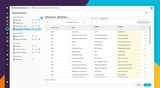
Mapping your general ledger accounts to a financial statement is one of those jobs everyone in finance knows and nobody wants to mess up. Whether you call it account mapping, GL mapping or GL coding, it is matching every account in your chart of accounts, line by line, to the right row on the P&L (income statement), balance sheet or cash flow. Miss one account or mis-map another and the numbers don't reconcile. Get it right and it takes hours but it is longer again if you're rolling the work out across multiple entities, branches or depots. Phocas Financial Statements has just added two features that change this. A Statement Library of ready-to-use report templates and AI-suggested account mapping with confidence scoring. Together, they turn an important manual setup task into something you can replicate and trust.
Read more
When the results of the largest, global BARC The Planning Survey 2026 came in, the numbers that stood out most were outcomes. 100% of surveyed Phocas users achieved a better quality of planning results. 100% reported product satisfaction and 91% said they would definitely or probably recommend Phocas to another organization.
Read more
Ease of use is one of the most consistent things customers say about Phocas. It comes up in case studies and customer conversations. It is this phrase or the word ‘intuitive’ that appears most reliably when users describe what they like most about the planning tools. When BARC The Planning Survey 2026 results came in, it was reassuring to see that consistency reflected in the independent research.
Read more
Artificial intelligence is changing the way finance teams can approach financial reporting. From automating repetitive tasks to analyzing financial statements, AI-powered tools promise faster and more efficient financial reporting processes. The use of AI in finance to create common reports like balance sheets, cash flow statements or for more specific tasks like performance analysis dashboards can offer significant benefits. Yet along with the benefits of AI come some known issues.
Read moreBrowse by category
Find out how our platform gives you the visibility you need to get more done.
Get your demo today