Inventory management is vital for all suppliers in the automotive aftermarket and spare parts industry in order to operate efficiently and remain profitable. It entails a complex balancing act of ensuring enough stock is available for customers when they need to purchase, while simultaneously making sure there is no surplus stock waiting in the warehouse for long periods of time.
In order to successfully do so, suppliers in the automotive aftermarket and spare parts industry today must provide wholesalers, retailers and independent repair shops with the correct parts in the shortest space of time.
However, the supply chain and distribution channels for automotive spare parts and accessories is complex as it consists of a myriad of moving parts:
- Different customer types
- Price and price sensitivity
- Market potential for specific products and
- Competition from a variety of local and international manufacturers
It is widely believed that once a company can navigate through these complexities and have the ability to forecast sales and estimate future demand to its most accurate number, it will significantly streamline the supply chain, enjoy more efficient operations and generate better sales thereby defeating the competition.
To say that forecasting sales and predicting demand in the industry is difficult would be an understatement. The fluctuation of prices, demand and even competition play a hand in making inventory management one of the most challenging components of the automotive aftermarket and spare parts industry.
How can companies overcome this challenge?
Business Intelligence
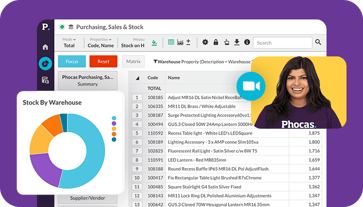
A business intelligence tool can help organisations analyse their data and draw insight from their data to make accurate forecasts and estimations to cope with the future.
Sydney Automotive Paints and Equipment (SAPE) is a leading wholesaler and retailer in the automotive aftermarket parts industry in Australia. SAPE uses automotive business intelligence to provide great customer service and keep ahead of the competition.
SAPE works hard to ensure its broad product range (some 4500 items) reaches customers in a timely manner. SAPE has been using Phocas business intelligence software with its Pronto ERP system for about four years, mainly to stay on top of its product lines and sales.
Warren McMartin, managing director of SAPE says he is much calmer with the help of automotive business intelligence because he has all the facts in front of him and 'making decisions is much easier'.
“When I review the numbers, I can see straight away if one of our top customers is down. We react immediately and find out the reason for the anomaly. Our reps speak directly with the customer and because we know all the orders and the product mix, the customer is willing to tell us that they have had a tough month or they have ordered incorrectly. Whatever it is, maybe it’s our mistake, we are on to the issue and resolve it,” explains McMartin.
Ultimately, suppliers will have the ability to better manage their inventory and ensure no sales opportunities are lost as a result of poor inventory management.
To learn more about how Business Intelligence software can assist you in operating a more efficient and profitable business, download our free ebook ‘Business Intelligence Guide for Automotive’ by clicking on the image below.