Supplier price rises affect the UK building supply industry but data helps
In the MRA Building Market Report for Q2 2026, 55% of merchants named supplier price rises as their single biggest problem.
"Margins are getting squeezed from both directions," says Nicola Osborne, building supply data expert at Phocas. "Suppliers are pushing costs up, customers are pushing back on price and merchants are stuck in the middle. The businesses coping are the ones who understand their own data well enough to know exactly where they can absorb costs and where they can't."
Cutting costs without cutting corners or alienating the customers you rely on, is the real challenge for timber and building materials merchants. Here are some ways Nicola recommends how data can help.
1. Spot the inefficiencies in your own processes
Before reviewing supplier terms or pricing, look inward. Use analytics to consolidate your financial and operational data into reports different teams can query and your inefficiencies become clearer. For example, two separate trucks going to the same customer in one day when a single delivery would do.
"Once you know about it, the fix is often a five-minute conversation," Nicola says. "A quick chat with that customer about batching their orders, and the second van is not required."
2. Optimize your inventory management
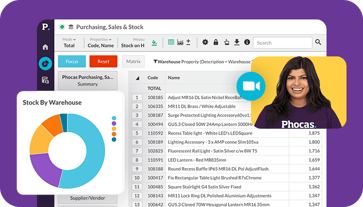
Supplier costs are also linked to the products in your portfolio. The thousands of products held in stock costs money too, in warehousing, in tied-up cash, in write-offs when stock doesn’t move. Measuring stock metrics, following inventory dashboards and reliable demand forecasting using sales history and product trends, keeps stock levels accurate.
Managing inventory methodically also helps manage cashflow and run a more efficient warehouse. Monitor slow and fast-moving stock also protects a builders’ merchant from not having the stock when needed. In a competitive market you want to avoid frustrating customers who rely on you specifically for their specific projects.
3. Use your data at the negotiating table
Supplier relationships work both ways and data helps keep everything transparent. Analysing a supplier's performance and cost structure over time shows you exactly where you have room to negotiate, and where collaboration works best.
Logistics data helps too, particularly right now. UK fuel and freight costs have increased since the Middle East conflict disrupted shipping routes, and many merchants are already absorbing higher transport surcharges from their own suppliers. Analysing delivery routes and consolidating shipments where you can is one of the few options still available to offset these costs. Knowing the true cost per delivery lets you better plan routing instead of just absorbing every surcharge that lands on your invoice.
"Merchants who bring their own data to a supplier conversation get a very different response than merchants who just ask for a better deal," Nicola says.
4. Let automation and AI enhance workflows
Generative AI and automation tools are increasingly being used across the sector to cut costs, and it makes sense. AI is well suited to replacing repetitive manual tasks, freeing your team for the work that is more high value and requires a person.
But Nicola is clear AI only works with the right data foundation. "The construction sector has traditionally been slow to adopt new technology, mostly because it couldn't find tools that matched how the industry works but then loads of industry specific options have emerged," she says. "AI is only as good as the data underneath it. Get that connected and consolidated first, and then the automation becomes accurate and effective too."
5. Cut costs without losing customers
Cost control only works if you keep the customers who are profitable coming back. Not every customer behaves the same way, and treating them as if they do is expensive. Segmenting your customer base using the RFM model across recency, frequency and monetary patterns lets you prioritize the accounts that need servicing at the right time. Data helps your sales reps plan their day so they are focusing on high value accounts, at risk customers and get the most return from their time.
Getting the data foundation right
"To protect your market share and your margins in this environment, you need a clear understanding of your sales, inventory and purchasing data," Nicola says. "This comes from analysis, segmentation and follow-up. Get the data foundation right and you're building a business that's ready for whatever comes next, including price rises."
Phocas works with leading timber and builders' merchants and suppliers across the sector including STARK Building Materials UK, Alsford Timber, EH Smith, Builder Depot, BSS, Haldane Fisher, Monument Tools and the BMF.
Win more supply contracts in the construction industry
Download now


Nicola is an experienced relationship manager in the distribution industry and knows how to extract value from data. She helps building material suppliers, timber merchants and HVAC and plumbing distributors to optimise their operations with connected data and achieve measurable success.
Related blog posts

Aktion Associates has been named FY26 North America Partner of the Year in the inaugural Phocas Partner Awards, following 90% year-over-year growth. A leading North American ERP and business technology partner to mid-market companies in architecture, engineering, construction, distribution and manufacturing, Aktion has worked with Phocas for six years to help customers see business performance more clearly and make more informed decisions.
Read more
DIFOT (Delivered In-Full, On-Time) or OTIF (On-Time In-Full) is a fundamental KPI when analyzing the performance of your supply chain. The main goal is to get your customers the products they need, when they need them, in the quantity they ordered. DIFOT measures how successful your business is at achieving this objective and identifies procurement problems and supplier reliability.
Read more
The building materials and construction industries are the engine room of the world making our homes, hospitals and hotels. The group represents 13 percent of global GDP. Despite high demand from the public and private sector, the industry has faced its own challenges post pandemic grappling with inflationary pressure, cashflow management and supply chain issues. We will explore five trends or advancements that are being adopted by the build materials and construction industry to manage change and ease these pressures.
Read moreBrowse by category
Find out how our platform gives you the visibility you need to get more done.
Get your demo today