Why distributors have more stock despite rising inventory holding costs
Effective inventory management is essential for profitability in wholesale distribution. Understanding and meticulously managing inventory holding costs is also a fundamental requirement for business success. This blog will explain inventory holding costs and critically examine why distributors are increasingly opting for more stock despite the associated expense this year.
What are inventory holding costs?
Inventory holding costs, often referred to as inventory carrying costs, represent the total expenses associated with storing unsold inventory. These are the costs incurred from the moment goods are acquired until they are sold. Holding costs are a comprehensive financial perspective of maintaining inventory levels and warehousing.
For distributors, inventory or SKUs (stock keeping units) are your core asset. Therefore the costs associated with holding this inventory directly impact your financial health and competitive position. High holding costs erode profit margins, tie up working capital and can reduce investment in other areas of your business. Most distribution professionals recognize that every unit of inventory held carries a risk but not everyone fully understands the effect on cash flow.
Inventory holding costs are not a single expense. They are comprised of several distinct categories, each contributing significantly to the overall total. These include capital costs, ordering costs, storage costs, service costs and risk costs.
Capital costs represent the largest component of inventory holding costs for most wholesale distributors. This category includes the cost of the money spent on inventory which in 2026 is high. Whether funds are borrowed (incurring interest payments) or sourced internally (representing an opportunity cost for alternative investments), the capital tied up in total inventory value could otherwise be generating returns. This is often calculated using the company's cost of capital.
New inventory management survey indicates distributors are holding more stock
A recent Phocas inventory trends in wholesale distribution survey indicates a notable shift in inventory management among distributors. A significant percentage of respondents are electing to increase inventory levels, even acknowledging the increased holding costs. This move is largely driven by the need to retain customers. In a competitive market, the ability to fulfil orders promptly and reliably is a critical differentiator. Distributors are making a conscious decision to absorb higher carrying costs to guarantee product availability, minimize lead times and secure customer loyalty. This trend signals a re-evaluation of traditional inventory management systems in response to evolving market dynamics such as tariffs and more M&A activity that is creating mega distributors in some categories.
Why are distributors holding more inventory in 2026?
The current economic landscape is making distributors reassess traditional inventory strategies. Despite the well-understood financial burden of increased holding costs, a discernible trend towards higher inventory levels is emerging. This shift to more inventory is a direct response to several powerful external pressures.
1. Supply chain volatility
Recent years have highlighted the inherent fragility of global supply chains. Disruptions caused by pandemics and natural disasters and have severely impacted product availability and lead times. Distributors are now holding additional buffer stock to mitigate the risk of stockouts during periods of supply chain interruption, ensuring continuity of supply to customers. ‘It is what we do best, supplying customers,’ is a core sentiment of distributors holding more stock.
2. Geopolitical instability and tariff uncertainty
Geopolitical tensions and the unpredictable tariff regulations have introduced uncertainty into global trade. Trade barriers, import restriction or sudden cost increases due to tariffs necessitate pricing and ordering adjustments. Distributors are building inventory reserves to manage these risks. First they accumulated stock before potential tariffs took effect or supply routes become compromised, now they are trying to maintain competitive pricing with data interrogation.
3. Demand forecasting challenges
The pace of market change has made accurate demand forecasting increasingly difficult without up-to-date data and the right planning tools. Historical forecasting models often struggle to account for rapid shifts in preference unless they are constantly updated. To manage the risk of understocking and missed sales opportunities (which can be more costly than holding excess inventory in some cases), distributors are opting for larger safety stocks. This provides a necessary cushion against forecasting inaccuracies, ensuring they can meet fluctuating customer demand.
4. Inflationary pressures
Persistent inflationary pressures contribute to the rising cost of goods. Distributors are finding that the cost of acquiring inventory is increasing. In anticipation of further price hikes from manufacturers, some distributors are strategically purchasing larger quantities of inventory in advance. This approach, known as forward buying, aims to lock in lower prices, potentially saving more in procurement costs than is spent on increased holding costs.
5. Increased competition means distributors willing to hold stock for customers
The distribution sector is highly competitive. Competitors are constantly vying for market share, and the ability to fulfil orders immediately is a significant advantage. Distributors are increasingly willing to absorb higher holding costs to guarantee product availability for their customers.
The impact of increased inventory on holding costs
While the rationale for holding more inventory in 2026 is evident in the Phocas wholesale distribution inventory trends survey, it is important to acknowledge the direct and indirect consequences on inventory holding costs. This decision to stock more inventory (22% carry more than 90 days) has significant financial and operational implications that require careful management.
Direct financial implications
The most immediate impact is a direct increase in all components of holding costs. Higher inventory values mean greater cash flow tied up, leading to increased capital costs. More physical goods necessitate larger or additional storage space, driving up rent, utilities and labor expenses. Expanded inventory levels also translate to higher insurance premiums and administrative overheads for managing the larger stock. Crucially, the risk of obsolescence, damage, shrinkage, and depreciation escalates proportionally with the volume of inventory (the survey shows 26% have 6-10% of deadstock). Each additional unit contributes to the overall cost burden, directly impacting profitability.
Operational challenges
Increased inventory levels introduce several operational complexities. Warehouse space optimization becomes more challenging, potentially leading to inefficient layouts and slower pick times. The risk of misplacing or mismanaging inventory items grows, requiring more rigorous tracking and control measures. Managing a larger physical footprint can strain existing warehouse staff and require additional hiring, further increasing labor costs.
Capital locked in higher inventory levels cannot be reallocated to other strategic initiatives, such as technology investments, market expansion or product development. This can limit a distributor's ability to respond quickly to new market opportunities or competitive threats. While intended to mitigate supply chain risks, excessively high inventory can also create new vulnerabilities, particularly if demand suddenly shifts or product lifecycles shorten unexpectedly. Balancing the benefits of increased stock against these strategic trade-offs is a continuous challenge.
Strategies for managing and optimizing holding costs in 2026
Despite the prevailing trend of holding more inventory, distributors must remain vigilant in managing and optimizing holding costs. Proactive strategies are essential to mitigate the financial impact of increased stock levels and maintain profitability.
- Implementing sophisticated inventory management systems (IMS) is critical. These systems leverage data analytics to provide real-time visibility into inventory levels, sales, movement and demand patterns. A wholesale distribution data analytics solution can optimize order quantities, set dynamic reorder points and identify slow-moving or obsolete stock. By automating processes and providing insights about planning changes, these systems improve forecasting accuracy and minimize unnecessary inventory accumulation, directly impacting capital and risk costs, and ultimately improving inventory turnover.
- Comprehensive data visibility across the entire supply chain is a must. This means integrating data from suppliers, warehouses, sales and logistics partners into one platform so you can measure metrics and benchmark. With strong data visibility, distributors can monitor stock levels at various locations and advise customers what’s available. This proactive approach enables more informed decision-making, allowing for timely adjustments to procurement and distribution strategies.
- Cultivating collaborative relationships with suppliers can significantly enhance performance (87% of distributors say data enhances supplier relationships). By fostering transparency and sharing performance data distributors build trust which in turn can reduce inventory costs. Reliable suppliers can provide more accurate lead time data, reducing the need for large safety stocks. These partnerships build resilience and allow for more responsive inventory adjustments.
- Efficient warehouse operations are fundamental to controlling storage costs. This includes optimizing storage layouts to maximize space utilization, implementing advanced picking and packing technologies and streamlining internal logistics processes.
- Effective demand planning requires a concerted effort across an organization's sales, operations and finance departments. Sales teams provide critical insights into customer preferences and market trends; operations manage inventory levels and fulfillment; and finance provides budgetary oversight and cost analysis. By aligning these functions, distributors can create more accurate demand forecasts, leading to optimized purchasing and reduced instances of overstocking or understocking. This integrated approach ensures that inventory levels are aligned with actual market needs, thereby minimizing unnecessary holding costs.
- Beyond holding more inventory, distributors must implement diversified risk management strategies. This includes diversifying the supplier base to reduce reliance on a single source (average supplier networks are 50+ based on Phocas survey) , exploring regional sourcing options to shorten supply chains and establishing contingency plans for potential disruptions. Additionally, implementing robust quality control measures can reduce damage rates, while continuous monitoring for obsolescence can prevent significant write-offs.
Are your inventory holding costs under control?
The imperative to hold more inventory in 2026, driven by external pressures, has undeniably elevated the financial significance of inventory holding costs. Are your current strategies adequately addressing this challenge? We recommend reviewing the Phocas inventory trends survey and comparing the inventory benchmarks with your inventory management practices plus a rigorous analysis of your holding costs. If you are holding more inventory, how effectively you are managing the associated costs?
Inventory trends in wholesale distribution
Download now


Katrina is a professional writer with a decade of experience in business and tech. She explains how data and AI can work for distribution professionals and finance teams without all the tech jargon.
Related blog posts

In 2026, wholesale distributors continue to operate in an environment shaped by ongoing supply chain disruptions and demand fluctuations. The complexity of managing inventory levels has intensified as businesses cope with the economic fall out of the Middle East crisis. Margin pressure is an ongoing issue while trying to meet customer demand across traditional channels and ecommerce.
Read more
Wholesale distributors rely heavily on data to guide inventory management across thousands of SKUs and complex supply chain operations. With variables like gross margin, cost of goods sold (COGS) and inventory turnover, professionals working across a distribution business need to determine what’s relevant to them as well as how they work together.
Read more
Inventory management is a tight-rope balancing act. Ordering too much leaves you with excess stock tying up capital and warehouse space. Ordering too little puts you at risk of running out of stock, leading to stockouts, missed sales and frustrated customers. Inaccurate inventory forecasting means storage fees, excess inventory, waste from unsold goods and operational inefficiencies that eat into profits.
Read more
Inventory days formula is equivalent to the average number of days each item or SKU (stock keeping unit) is in the warehouse.
Read moreBrowse by category
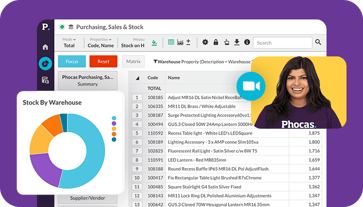
Find out how our platform gives you the visibility you need to get more done.
Get your demo today