Think about the number of business decisions you face daily. When you consider the options, are you using data, facts, and the best types of evidence available to you to inform the decision-making process?
Traditional business decision-making may involve reviewing information from multiple sources to figure out a path forward. If you need additional information from any of the reports, you need to request a new report to be generated. That adds up to a process that’s neither efficient nor insightful.
It was much more difficult to find the facts and data you needed to make a decision in the past. Today, technology brings a wealth of data that can be collected, shared, organized, and analyzed in ways never before imaginable.
Enter fact-based decision-making, your most useful tool for delivering better business performance. Companies that prioritize the use of fact-based data analysis boast a revenue growth that’s more than double the rate of companies that don’t use business intelligence and analytics, and they grow employment at a rate that’s four times faster than their less digitally-driven peers, according to the National Center for the Middle Market.
Why does fact-based decision-making work so well? We looked at the reasons why this strategy is so necessary right now to drive business performance.
Analytics and evidence-based decision-making
Analytics is defined as “the scientific process of transforming data into insights for the purpose of making better decisions,” by INFORMS, a professional association dedicated to best practices and advances in operations research, management science, and analytics.
What that means: In the same vein as the scientific method, analytics follows a predetermined pattern. Digital technology analyzes data and turns it into insights that can be used for better decisions. Using analytics doesn’t take emotion or passion out of business. It is no substitute for strong leadership, but it adds a powerful layer of awareness that can lead to better decision-making.
Analytics are best used to achieve a strategic goal – which is why many organizations invest their resources in software that offers data analytics capabilities to achieve business growth and solve key issues in the company.
The end of bias and gut feeling
The days of “going with your gut” or relying on the opinions of a few select stakeholders are long gone. With the help of data analytics software, you can find non-obvious answers and remove remove subjectivity from decision making. When we use the facts at our disposal, there’s no need for arguments over the best decisions to take or disputes over numbers. The unbiased nature of the data allows you to make drama-free decisions that benefit departments, and the company as a whole.
For example, sales teams looking to increase sales can use empirical data, including real-time product, pricing, and customer details.
Or the finance team can examine their expenses data to identify where spending is over budget, which enables them to make effective decisions to improve profitability.
Customer service teams can use dashboards and visualizations to track service KPIs and metrics, allowing them to improve forecasting and determine which customer service methods are working and which are not.
Identify opportunities to grow sales
Watch now
Efficient, repeatable analysis
Modern data analytics software can crunch big data sets very quickly, taking into account hundreds of market variables. The automated nature of the software enables it to adopt a methodical, repeatable process for analysis. It improves data quality, removing the need for the finance department to spend hours on manually data entry and data validation.
There’s simply no substitute for a system that automates data collection and improves data management to generate accurate analyses.
Clear and accurate insights
Some decision-makers may doubt the ability of data analytics software to consistently produce accurate, actionable insights that lead to data driven decision-making. Give it time. As the outcomes of the decisions become more reliable and predictable, managers become more and more comfortable with fact-based decision support systems. Over time, the strategic long-term benefits and ROI will appear.
According to the Center for the Middle Market report, 85% of middle market companies deploy analytics to some degree in their decision-making process. To remain competitive in this market, it’s essential to use data-driven insights to give you a complete view of your business.
Fact-based decision-making can revolutionize the way your company operates. When you have the data and the analytics driving your insights, your decision-makers can make better decisions that lead to business growth.
Retool your planning
Download now


Empowering businesses with intuitive data analytics, driving informed decisions for growth and profitability. We make people feel good about data.
Related blog posts



Browse by category
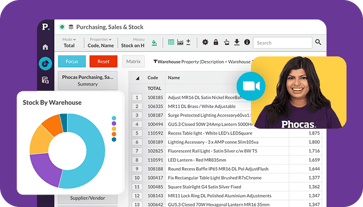
Find out how our platform gives you the visibility you need to get more done.
Get your demo today